
Revenue design
The playbook works.It just wasn't written about your product.
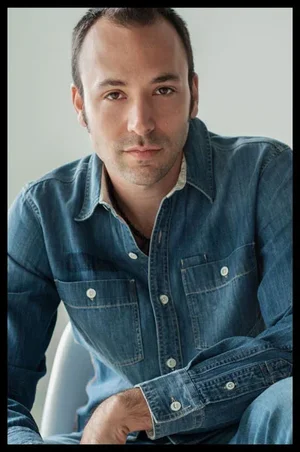
I'm Jordan Blackman. I design commercial models for products where copying the nearest competitor would damage the thing that makes them work: what you sell, how it's priced, and what the exchange feels like to the person paying.
Experience built inside real product teams







Featured in & on stage




Why it wasn't written about yours.
Best practice is a summary of products that aren't yours. Usually that's close enough. It stops being close enough when the thing that makes your product valuable is the same thing the playbook assumes away.
It assumes
- Free and daily.
You sell something people buy once and keep, and they open it on occasions, not on a streak.
- Comparables.
Your product sits between genres, or in a category three years old, or in one nobody has made money in yet.
- Tuning.
Your problem isn't the numbers. It's the model the numbers are attached to.
Products the playbook wasn't written for.
Selected workHeads Up!
For Warner Bros. A paid app in a free market, where the play happens between people in a room. Most mobile assumptions don't transfer. Eight years running it.
Wildcard
Plays like a MOBA, looks like a hero shooter, monetizes like a trading card game.
Hempire
With LBC Studios. Two first-time founders, pre-launch. Past 14 million downloads since, by third-party estimates.
Named clients, and what I did for them. No client figures, because most of this work is confidential and I don't publish numbers without permission.
What you get
A decision your team can build from.
Every engagement produces the same four things, whatever the product. Your team does the production design, the engineering and the experiments. I don't run your team.
A decision brief
What we know, what we suspect, and what needs testing, kept separate.
An options comparison
The credible routes, with the economic assumptions written out so your team can argue with them.
A design direction
The offer, the flow and the pricing, specified closely enough to build.
A test brief
What to measure, what would count as working, and what result would change the recommendation.
The method
I don't start with the answer. I start with whether the answer applies.
Most engagements begin with a reference. A competitor who solved it, a framework someone read, a pattern the room already agrees on. The first thing I do is go read it properly and work out whether it says what people think it says.
Often it doesn't. That's usually where the money is.
The six stepsA borrowed structure is right when we have the problem it solves and no better native answer. It's wrong when it installs a synthetic version of something we already have for real.
When I'm the wrong call.
You want the current playbook, run fast.
On a live free-to-play game in an established genre, with the budget to move quickly, you want a pattern specialist. Turbine and Mobile Game Doctor are both excellent at it and I'm happy to make the introduction.
You want my read, at a smaller scale.
Growth Mode is a monthly membership. Same person, one request at a time, a fraction of the cost. Plenty of the questions people bring me can start there.
Growth Mode →You're about to hire someone for this.
Usually you should, eventually. But the commercial model decides what the role is. Hire before you've made that decision and you're writing a job description you're guessing at, on a six-month clock, for a call that's in front of you now. I'm the thing you do first, not the thing you do instead.
Come to me for the engagement when the pattern itself is the question.
What's the decision in front of you?
Tell me about your product and the call you have to make. A few sentences is enough. I'll read it and reply about fit and a useful next step.